How to Visit Zion, Bryce & the Grand Canyon Without Paying $100 Per Person: 2026 Guide for International Visitors
This guide is Part 1 of a two-part series created to help international visitors plan a 2026 trip to visit some of the most popular National Parks without overspending. Part 2 will highlight our favorite National Park dupes and how to build a complete itinerary using some of our favorite local trails and landscapes that don’t come with the potential higher costs of the big parks.
Beginning January 1, 2026, the U.S. National Park Service is introducing a new pricing structure that separates U.S. residents from international visitors. Under this system, residents (U.S. citizens and legal residents) continue to pay the standard entry rates, while non-residents (international visitors) are subject to a new fee category. This shift has created a wave of headlines, many claiming that Zion, Bryce Canyon, and the Grand Canyon will now cost $100 per person.
That number is technically correct, but only for international visitors who skip out on the new $250 International Annual Park Pass. For anyone coming from abroad and hoping to visit more than one park, the annual pass remains the most affordable option (more on that below).
Because Kanab sits between Zion, Bryce, and the North Rim of the Grand Canyon, confusion about these changes has real impacts on our local businesses and on travelers planning a Southwest road trip. This guide breaks down the 2026 updates in simple terms: what changed, who it affects, how the $250 international pass works, and how to avoid paying $100 per person at each park.
What the 2026 National Park Fee Changes Mean for International Visitors
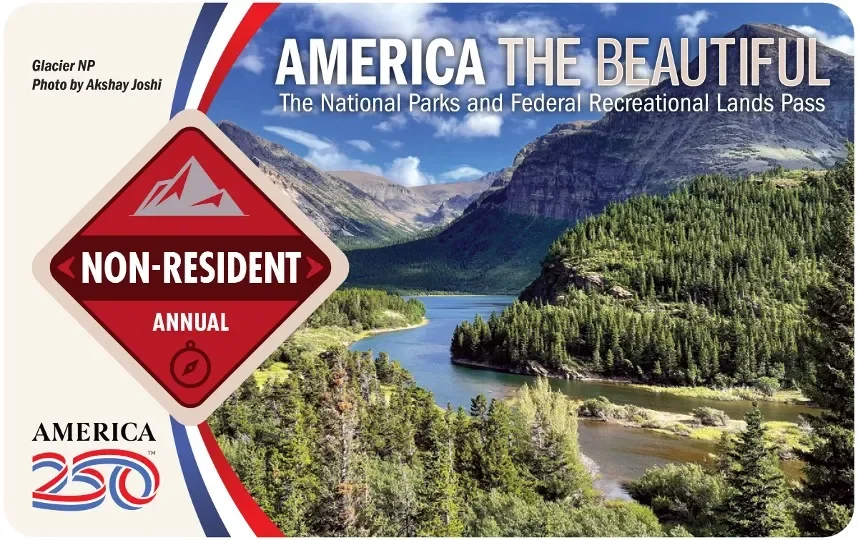
Under the new pricing system, international visitors have two ways to enter many of the most visited national parks. They can purchase the new $250 International Annual Park Pass, or they can pay the standard entrance fees plus $100 per-person fee at 11 major parks, including Zion, Bryce Canyon, and Grand Canyon National Park. The $100 charge and the standard entrance fees apply only to visitors who choose not to purchase the annual pass.
The International Annual Park Pass is valid for one year at all U.S. National Parks. The pass covers the passholder and everyone traveling in the same private, non-commercial vehicle at Zion, Bryce Canyon, and the Grand Canyon.
Starting in January 2026, passes can be purchased digitally through Recreation.gov and stored on a phone for immediate use. Visitors can still buy passes at park entrance stations, which directs more funds to that specific park (we love this option). Whether purchased online or at the gate, the pass can be saved digitally for easy access throughout the trip.
Kanab is the kind of place where people naturally end up seeing more than one park. A typical trip might include a full day in Zion, another day dedicated to Bryce Canyon, and a separate day carved out to visit the North Rim of the Grand Canyon. When you’re spreading National Park visits across multiple days like this, the International Annual Park Pass keeps your overall cost predictable.
The difference adds up fast. Without the pass, two adults visiting all three parks would spend close to $700 USD in surcharges and standard entrance fees. A group of four would pay $1300 USD in surcharges and standard entrance fees. With the International Annual Pass, the total drops to $250 for a group of two to four travelling in the same car at Zion, Bryce, and the Grand Canyon. If you’re planning to see more than one park, the annual pass is undoubtedly the more affordable approach. If you’re looking for more details, here’s the official press release from the Department of the Interior.


Base Camp Kanab Welcomes Every Kind of Traveler
Kanab’s identity is shaped by the public lands that surround us, and when major changes roll out at the parks, the ripple is felt across the community. Visitors plan their routes, local businesses prepare for the season, and countless trips are built around Zion, Bryce Canyon, and the Grand Canyon. When headlines focus on the $100 figure without context, some travelers assume the Southwest has suddenly become out of reach. We want all our international travelers to know that we at BaseCamp37, along with the countless other small businesses in the region, cannot wait to welcome you to the Southwest in 2026.
We want to make sure you have clear information that shows the region is still accessible, that international visitors still have affordable options, and that a multi-park trip is entirely doable with the annual pass.
At the same time, we understand that not every traveler wants to navigate park gates or new fee structures, and that’s where Kanab shines even brighter. Some of the most remarkable landscapes in the Southwest sit outside the major parks, and many are free or require only low-cost permits. Buckskin Gulch, Water Canyon, Toadstools Hoodoos, Red Canyon, White Pocket, and the vastness of Grand Staircase–Escalante offer scenery and solitude on par with the National Parks, without costly entry fees or crowds. For visitors building a National Park-free itinerary in 2026, there are endless ways to experience the same red rock beauty, slot canyon adventures, and big-sky views that make this area special.
Part 2 of this guide will highlight our favorite National Park dupes and how to shape a full and rewarding trip to Kanab without entering a single high-fee area. Whether you're planning the classic Zion–Bryce–Grand Canyon loop or exploring the lesser-known corners of the desert, we’re excited to help you experience this region in a way that fits your budget and your style of adventure.